
Parallel Lives #2: Two Revolutions
Being the rising of the action

This post ended up being pretty long. Turns out it is hard to summarize nine years of South American revolution and still remain coherent. If you are seeing this in an email app, I recommend opening it in Substack directly.
If you haven’t already, I highly recommend reading Part 1 before continuing. Otherwise, there is a small recap ahead.

The story so far:
It is interesting times in South America. The upheaval of the Napoleonic wars has weakened the grip of Spain over her colonies, where the native criollos nurse old grudges against the ruling peninsulares (while keeping a paranoid eye on the masses). As royal authority crumbles, two men on opposite sides of the continent prepare to face the future: Simón Bolívar, a young Venezuelan aristocrat who has sworn not to rest until Spanish power has been removed; and José de San Martín, soldier of Spain for twenty years, who has turned his back to his imperial masters and put himself at the service of the revolution in Río de la Plata. All the while, news are travelling across the Atlantic…
Who Speaks for the King?
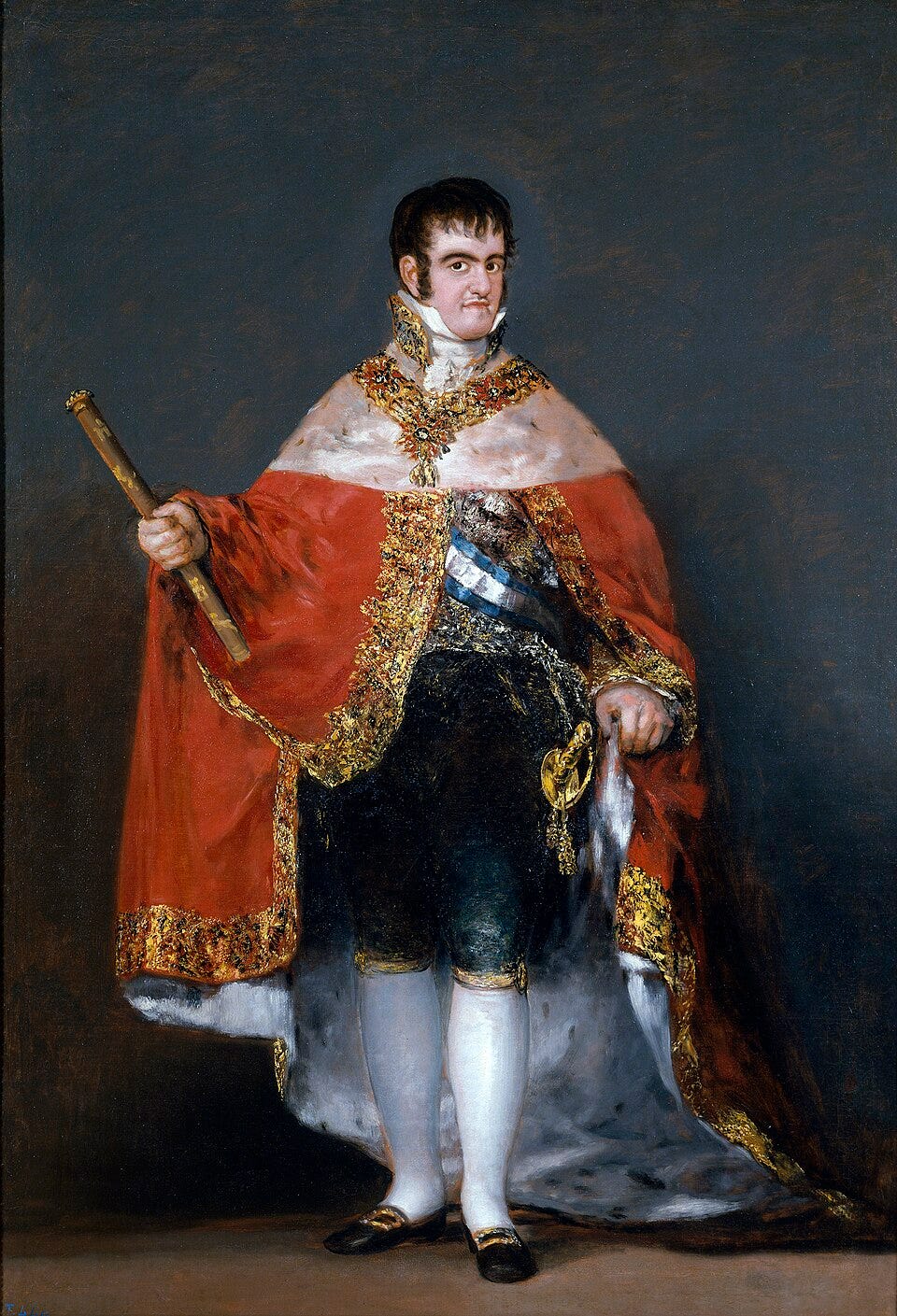
The forced abdication of Ferdinand VII unleashed a crisis of legitimacy in the colonies. In Spain, the juntas had been created under the reasoning that, lacking the king, sovereignty reverted to the people (in His Majesty’s name, of course). However, outside of the metropole this was a dangerous formula to invoke. A local junta would constitute a challenge to the existing colonial authorities (which, unlike in Spain, had not been toppled by any French invasion). Furthermore, if they were truly representative, the criollos would outnumber the peninsulares and give them a platform from which to reach for power. Lastly, it was also feared that they would serve as a launching pad for radical elements to advocate for full independence. In that last point, the authorities were later proven correct.
_-_Prado.jpg)
As a result, juntas in South America were initially suppressed more or less forcefully. Yet discontent had not been addressed, only stifled. It kept boiling under the surface, awaiting release.
Back in Spain, authority had coalesced into a Supreme Central Junta, which claimed dominion over the entirety of the Spanish Empire and led the fight against the French. In this latter point it did not prove entirely competent and after two years of disastrous war it had been cornered into Cádiz. As its final act, it convened the General Cortes to draft a constitution, dissolved itself, and transferred its powers to a five-man Council of Regency.
For many American criollos, this was the last straw. The Central Junta’s claims of primacy had already been somewhat contentious, but at least it could profess some degree of popular representation; that the Regency Council could then usurp its powers—without having allowed the colonies to form their own juntas first—was not a convincing move. Why should the colonies submit to its authority? A thought went through the mind of every dissatisfied criollo: If, in the King’s name, Spain can make up whatever government it wants, why can’t we?
This was 1810. As news traveled across the Atlantic and reached the shores of South America, the revolutions began.
Río de la Plata: Revolution à la France
Compared to the other Spanish colonies, Río de la Plata had a head start in revolution. For one, it had a relatively large white population (38% of the whole), which lessened the elite’s fears ofa race war. Geographically, it was far away not only from Spain, the metropole, but also Peru, the regional center of imperial power. And even though it had for long been a “secondary” Spanish possession, the viceroyalty’s strategic and economic importance had been on the rise over the last half-century—along with an ever more confident (and frustrated) criollo class.
Criollo power had been further strengthened by recent events. In 1806, when Spain had joined France’s war against England, a British expeditionary force had invaded Río de la Plata. Although Spain maintained some regular troops in the colonies, its defenses relied heavily on local criollo militias, which were cheaper than shipping soldiers all the way from Europe. This money-saving decision would extract its own kind of cost. When the British force approached Buenos Aires, the colonial authorities fled to the interior, but the militias self-organized, expanded its regiments, entrenched the streets and expelled the invaders. Victory lent the militiamen prestige, organization and self-confidence. They emerged from the ordeal as a political force, for and by criollos.
As a result, when in 1810 news about the Regency Council’s takeover arrived, the underground revolutionaries were in a prime position to strike. In a relatively bloodlessly coup later known as the May Revolution, militiamen seized power in Buenos Aires. Colonial bureaucrats were shipped to the Canary Islands and a criollo government was established. Though nominally acting on behalf of Ferdinand VII, the new regime was de facto independent.
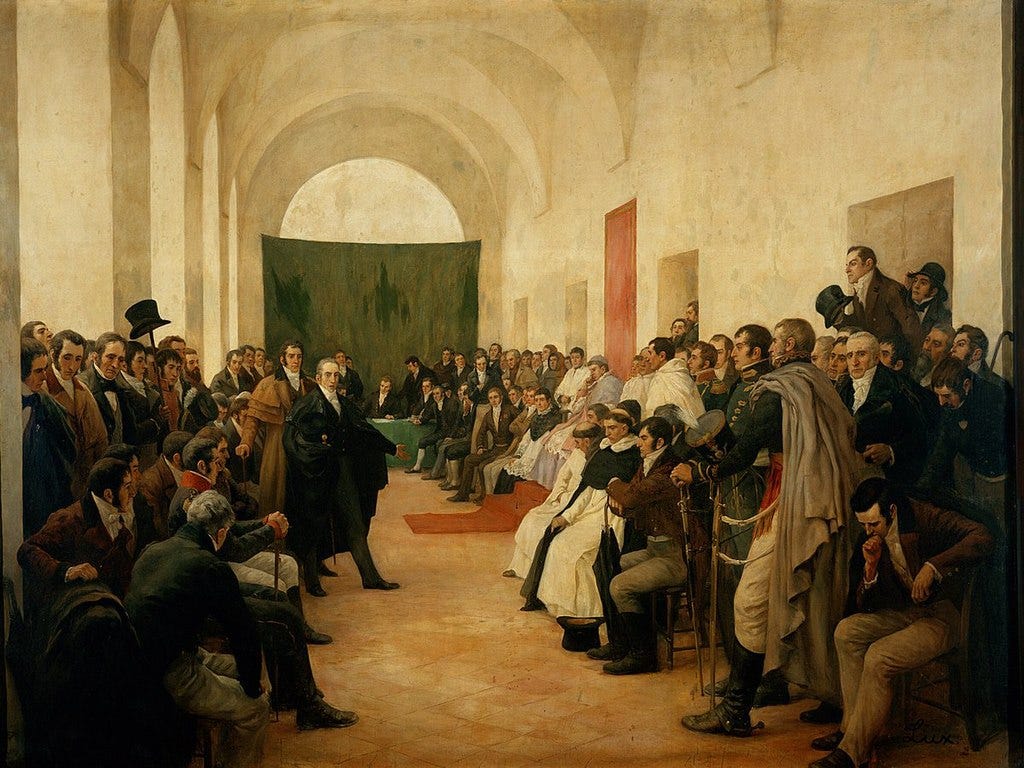

In the two years afterwards, the revolution in Río de la Plata developed into something like a smaller-scale reflection of the revolution in France. It split into factions and toppled itself twice; raised armies, attempted to export itself and fought off counter-revolutionaries; it even endured a short-lived Terror. By the time San Martín landed in Buenos Aires, government was in control of a triumvirate powered by Bernadino Rivadavia1: a sort of “intellectual oligarchy” that was trying to rapidly transform the “United Provinces of Río de la Plata” into a liberal, centralized nation—whatever the cost.
Although San Martín had come to put his talents at the service of the revolution, this did not mean that he was welcomed with open arms. First of all, his loyalty was suspect: after all, he had been a soldier of Spain for two decades, and his liberal sympathies created rumors that he was a British or even French agent. More crucially, the Buenos Aires’ political sphere had been monopolized by a small number of elite criollo families, who jockeyed for power and influence among themselves. As an outsider, he would have to work to obtain a seat at the table. A useful contrast is Carlos María Alvear, one of his companions on the ship that brought him from Europe: he was also a former Spanish officer answering the call of revolution, but he came from a wealthy and illustrious family that boosted his political career from the start. In those early months, the plebeian San Martín was in his care.
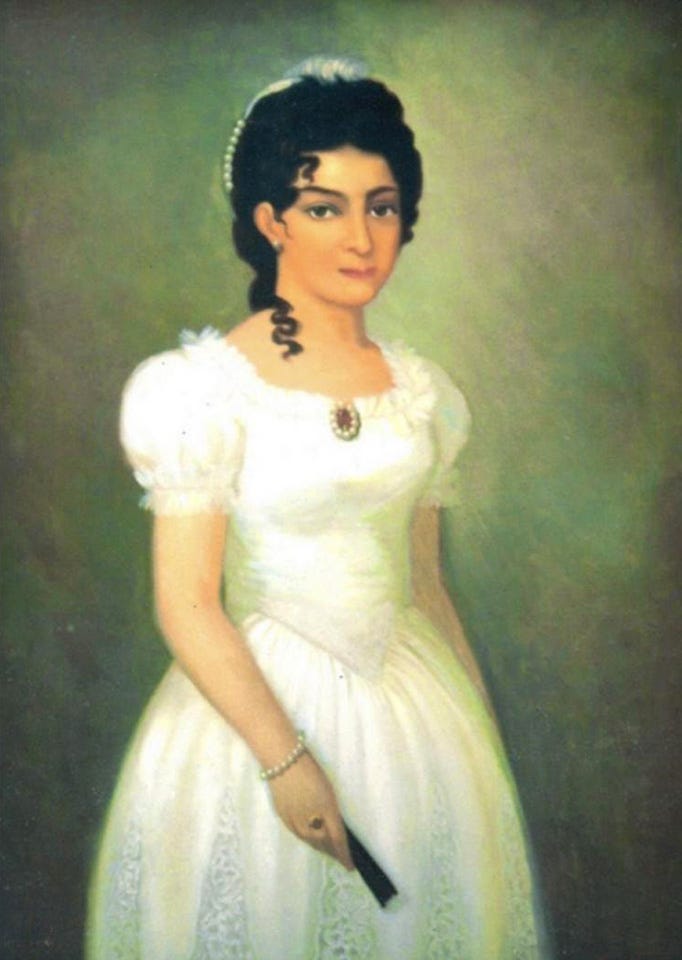
Luckily for him, the revolution could not afford to discard good officers, no matter how suspect and modest of breeding. He and Alvear were tasked with forming a corps of horse grenadiers and instruct them in the most modern European tactics; his rank was of colonel. San Martín set to work and soon he had constituted a capable fighting force, which gained him a measure of political influence. His real entry into scene would come with his marriage to María de los Remedios de Escalada, the young daughter of a wealthy local family2. There was much of the transactional in this arrangement (a foothold into porteño3 elite in exchange for an up-and-coming son-in-law), but all evidence points towards it being an affectionate union, if lacking in passion.
San Martín was now in a position to partially influence the events to come—and they were coming fast. The triumvirate, with its own version of enlightened despotism, had become unpopular. Its centralist policies were opposed by the other regions of Río de la Plata; its unwillingness to entirely renounce Ferdinand VII turned off more radical revolutionaries; and its authoritarianism was simply unlikable. Alvear led a coup to depose it, weighing in with the newly trained horse regiments—with San Martín’s support. The latter’s reasons were practical (the old triumvirate had become ineffective at furthering the revolution), but for Alvear it was also a chance to promote his own political faction. A constitutional assembly was called, which established the office of Supreme Director of the United Provinces of Río de la Plata and gave it to Gervasio Antonio de Posadas—Alvear’s uncle.
This brush with politics did little to enhance his standing, however, and he saw himself sidelined by Alvear’s faction. At any rate, the petty power plays of Buenos Aires were not his forte; while not apolitical, he saw himself committed to a wider South American cause. His experience as a soldier remained his greatest asset. In these circumstances, the orders to reinforce the Army of the North were welcome news4. This raised him to the rank of general and put him at the forefront of the effort to take Upper Peru.
In those days, the “United” Provinces were more aspirational than real. Río de la Plata was in conflict against the Spaniards and itself, and Buenos Aires was at the center of it. Porteño policy of centralizing government did not go over well with the regions, which saw no reason to replace Madrid with Buenos Aires. The responses varied: the interior provinces called for federalism, while the more peripheral regions of Upper Peru, Paraguay and the Banda Oriental5 refused to submit outright. While federalism was (mostly) combated in the political arena, the “rebel” provinces needed to be subdued by force.
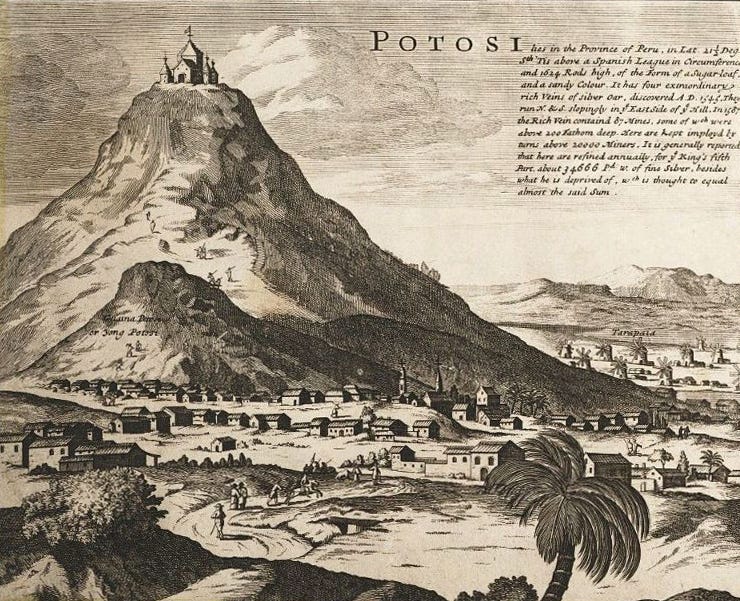

There were several reasons to take over Upper Peru. One was simple strategic security: the province was the most direct path through which the royalist stronghold of Peru could send an expedition to quash the revolution. But there was also history behind it. Upper Peru had been a province of the Viceroyalty of Río de la Plata, transferred over from the Peruvian domains. Within its borders was the incredibly rich mine of Potosí, whose enormous silver deposits had fueled economic growth in Europe and the region for centuries. Peru had swallowed it back after the May Revolution, and bringing it back into Río de la Plata’s sphere of influence was one of Buenos Aires’ obsessions—perhaps only surpassed by its mania with the Banda Oriental.
Several expeditions had been sent for this purpose, all in failure. As San Martín took command of the Army of the North, he would understand why. First of all, the army was in a bad shape. It was a ragtag group of underfed men, undisciplined, and lacking uniforms and pay. Part of this state stemmed from the latest catastrophic defeat, true, but even before standards had not been the best. Equally important was that they were not wanted there. Unlike Río de la Plata, the majority of the population in Upper Peru was not white, but Native American peons—80% of the total. The white elites monopolized wealth and land and feared that the revolutionaries from the South may bring the “French disease” of liberty and anarchy to their oppressed serfs6. As a result, they resisted the Army of the North’s advances and supported the royalist armies that climbed up from Peru.
Tasked with rehabilitating the squalid army, San Martín displayed the organizational skills that would make him famous. His first priority was to re-establish logistic lines, resume regular wages, and issue appropriate equipment—literally clothe the “naked army”. Once that was secured, he began to shape it up into a fighting force worthy of the name. He employed the modus operandi that would become characteristic of his command: drills and nutrition for the troops, education and discipline for the officers. Carrot and stick all around.
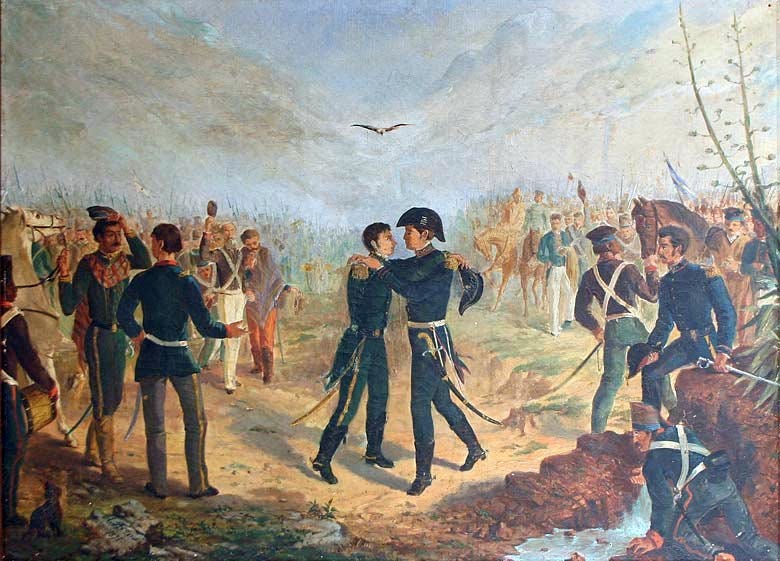

After examining the strategic situation, San Martín opted not to attempt a direct confrontation with the Spanish forces. Instead, drawing from his experience with irregular warfare during the Peninsular War, he co-opted local caudillos7 who were already waging guerrilla war against the Spaniards. This guerra gaucha, fought amidst the mountains and valleys of the Andean highlands, sapped away resources and attention from the royalist forces; all for the relatively low cost of logistical and manpower support. While this would not defeat the counter-revolution, it would stall it without wasting another army.
Yet this also meant that Upper Peru was a dead end. Neither the revolution nor San Martín could go further here. A new strategy was needed.
It was clear that the minds at Buenos Aires, by obsessing over “recovering” their lost provinces, were missing the big picture. The real focus should be on ensuring the conditions so that the revolution—in Río de la Plata and elsewhere—could last. Since the United Provinces existed only in the context of Spanish South America, this implied thinking not on a regional, but on a continental scale.
These thoughts circled San Martín’s mind. Out of them, a plan started to take shape and mature, until the way was clear. Then, he knew what he had to do.
In August 1814, San Martín renounced his command at the Army of the North. He requested to be made governor of Cuyo instead, a gray, minor province on the Eastern side of the Andes. Alvear and the Buenos Aires establishment deemed it an insignificant position and agreed without a fuss, happy to see him away from the center of power. That was exactly what San Martín wanted. Under the vigilant eye of the mountains, beyond the reach of porteño politics, he once more set to work.
Venezuela: Rise and Fall of the Patria Boba
Venezuela, on the north-eastern corner of South America, was the first of the colonies to receive Regency Council news. The reactions were not unlike in Río de la Plata: soon afterwards, the local criollos deposed the local authorities, shipped them to Europe, and seized power for themselves. Like most of the juntas of the time, however, they still clung to the fiction of ruling on behalf of Ferdinand VII—a position to which Bolívar objected. In his view, a declaration of full independence was the only serious choice, but his was not yet a majority opinion.
Still, a self-deluding junta was better than no junta. Bolívar found a way to support the new government without condoning its principles by leading a diplomatic mission in England8. There he proved an eloquent speaker, but he could not draw any concrete support from the British government, whose priority was to keep Spain in league against Napoleon. Fortunately for him, his stay was not entirely fruitless. It was in London that he met Francisco de Miranda.
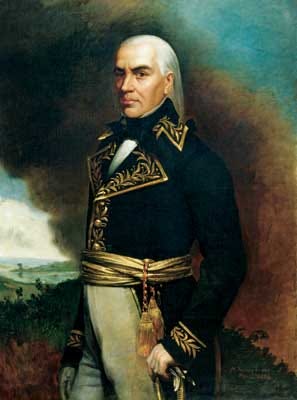

In those early years of South American freedom, Miranda was an eminence. A Venezuelan from Caracas and a veteran of the French Revolution, he had been the standard bearer for a free and independent Spanish America for decades. He envisioned all former Spanish colonies in the continent unified in a single enormous country, from the Mississippi to Patagonia, a utopian project baptized Colombia. After years of lobbying in several European courts, he had finally obtained his wish: in 1806, while the British were invading Río de la Plata, Miranda was executing his own invasion of Venezuela (also with British support). His goal: to establish an independent republic.
The time, however, had not been ripe. In Venezuela, as in Upper Peru, demographics made the elites less receptive to republicanism. 25.5% of the population was white, compared to 61.3% were blacks or pardos (mixed-race with some degree of black). The white populace was not well disposed to wager changes that could undermine their position of superiority or “overexcite” the masses; in particular, they feared anything that could unleash a genocidal race war—once more, the example of Haiti glared across the Caribbean like a warning. As a result, Miranda’s efforts foundered as society that clung more tightly to the protection of Spanish rule. This fear of the lower classes seizing power—the much-reviled pardocracia—would carry over into the time of the junta.
Miranda had been exiled in England ever since, but he remained the central political and ideological figure of the independentist cause. Though sixty years old, he retained his vigor, and in his revolutionary fervor Bolívar found a mirror of his own. They agreed on several points, especially concerning the need to assert outright independence, and when Bolívar returned to Caracas, he reorganized his political faction to become a platform for Miranda. When the old revolutionary arrived at Venezuela later that year, he found that Bolívar’s Sociedad Patriótica had paved the way for his ideals. Through their joint efforts, the national congress of the following year declared complete independence from Spain.
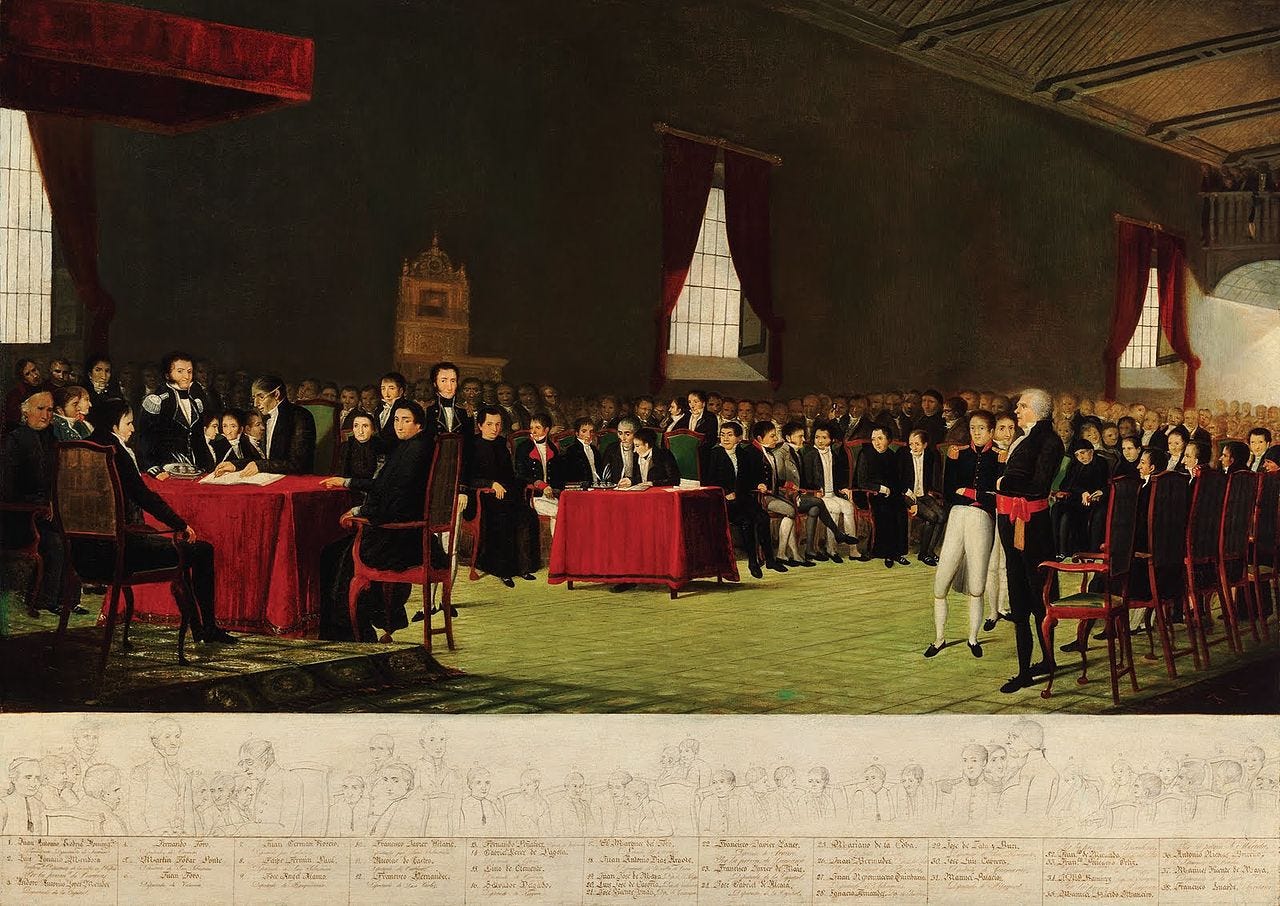

The constitution of the new country was an embodiment of Enlightenment ideals in almost all respects. Heavily inspired by the United States, it established a meticulously federal government with a weak central executive and liberalized trade. But although it theoretically proclaimed equality for all its citizens, it also carefully fenced off political rights to only apply to the well-to-do whites. Tellingly, the slave trade was abolished, but slavery itself was allowed to continue, as this would affect the wealthy landowners that depended on forced labor.
Almost immediately, the new government was struck by blow after blow—some external, some of their own making. First of all, its authority was not universally accepted: there remained several cities that remained loyal to the Spanish and needed to be lured or reduced. In addition, it had to reckon with the frustration of the pardos. The political restrictions had not gone over well with the change-hungry underclass. As a result, black and pardo uprisings multiplied, encouraged by royalist agents who promised better conditions were Spanish rule to be restored. In turn, this made the white criollos skittish: was this not the very same pardocracia for which they had rejected Miranda a couple years prior?
Amidst growing chaos, a counter-revolutionary expedition made land from the Spanish Caribbean. Led by Domingo de Monteverde y Ribas, it was relatively small in comparison to the newly created Venezuelan army, but it quickly swelled its ranks from those malcontent with the republic.
And then, the wrath of God.
On Maundy Thursday of 1812, a powerful earthquake shook Venezuela. Caracas was reduced to rubble; taking the aftershocks into consideration, the death toll reached the twenty thousand mark. Bolívar was in the city at the time, and remained personally defiant in the face of disaster; as he made his way through the fallen buildings, he was recorded to have said: “We will fight nature itself if it opposes us, and force it to obey.” But for a deeply religious society, the material catastrophe acquired transcendental meaning: God’s punishment for their rebellion. As propaganda hits goes, this one was unsurpassable.
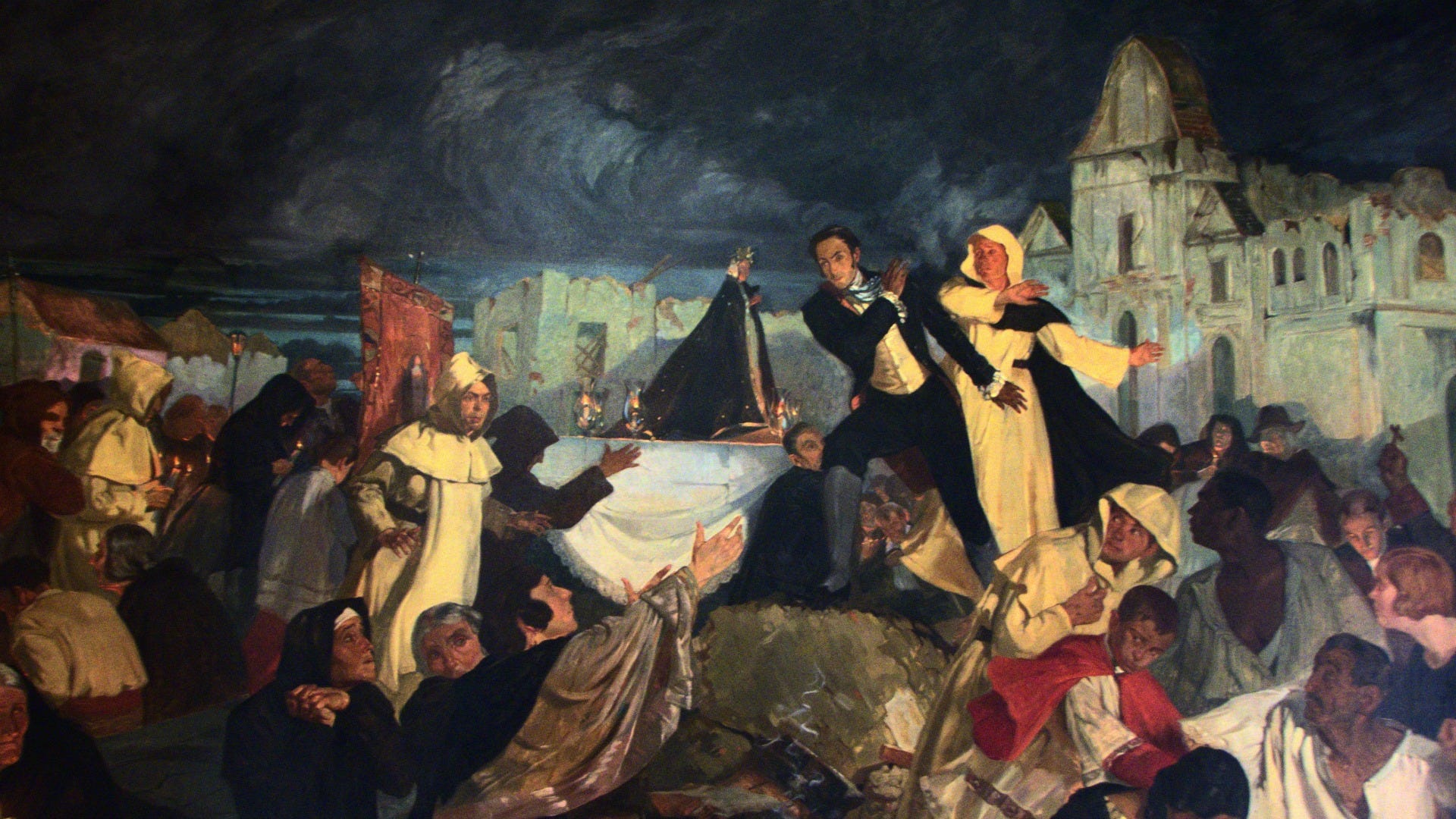
With catastrophe looming close, Miranda was given dictatorial powers to defend the republic. Yet at this critical moment, his grip slipped. Either reticent or unable to seize the military initiative, he led the Venezuelan troops from defeat to defeat. Meanwhile, Monteverde advanced towards Caracas unopposed, as the local elites, suddenly without appetite for revolution, folded without resistance. In the end, facing mass-defections and seeing no way out, Miranda prepared to surrender to Monteverde, on the condition that broad amnesty be granted to the patriots, as well as safe passage for those that wished to leave. He himself prepared to make for Curacao9.
Bolívar, whose relationship with Miranda had been steadily deteriorating, saw in this an act of treason. He and other officers arrested him before he could embark, and handed him over to the Spaniards10. After a lifetime dedicated to South American liberation, the Precursor, as he would later come to be known, died in a jail in Cádiz and was buried in a mass grave.
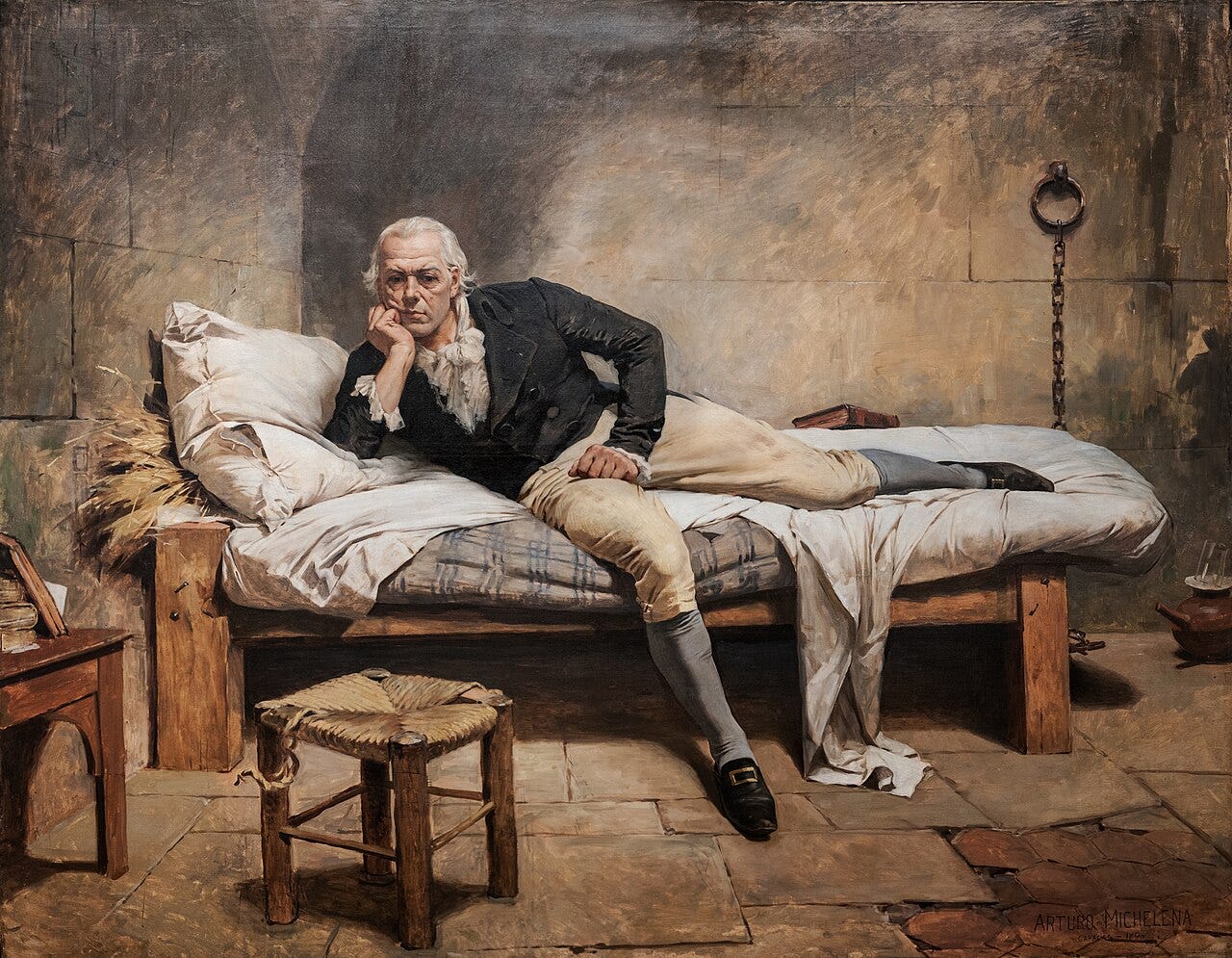

For his part, Bolívar sailed into the Caribbean. Behind him, the First Venezuelan Republic crumbled and burned; the patria boba11 was dead. It was a bad start for Venezuela as a free country; it was a bad start for Bolívar, whose involvement in the arrest of Miranda would haunt him for the rest of his career.
Yet not all hope was gone. There remained the will the fight, and the conviction that the war could have been won, if done differently. He would be back.
Cuyo: Engine of Revolution
When San Martín took over the governorship of Cuyo, the province was not at the front of anybody’s mind. Its greatest achievement since the May Revolution had been avoiding absorption by its neighbors; its main economic activities were agriculture and livestock farming, trading wines and fruits with the outside world. Politically and geographically, it belonged to the periphery of the United Provinces.
However, it was precisely Cuyo’s location that had caught San Martín’s interest. Its capital, Mendoza, was right at the foot of the Andes. On the other side of the mountains was Chile; in fact, were one to brave the trek over the cordillera, Santiago would be only a stone’s throw away12.
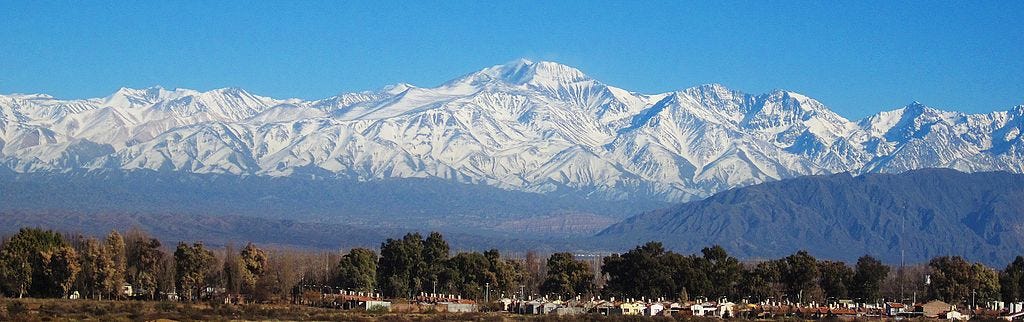

Cuyo was a suitable place to begin the implementation of San Martín’s plans. His analysis of the strategic situation had resulted in the following conclusions:
The revolution will not last unless Peru, the center of Spanish power in the continent, is also liberated.
From Río de la Plata, the two paths to reach Peru are either (a) by land, through Upper Peru, or (b) by sea, through Chile as the port of departure.
Upper Peru cannot be presently taken by force, on account of the difficulty of the terrain and the hostility of the locals.
Therefore, an expedition should be mounted to invade Peru from Chile.
In 1814, the last point of this “Continental Plan” implied also invading Chile. It was a case of re-liberation. Four years earlier, the Captaincy General had deposed its Spanish colonial authorities, a move partially inspired by the May Revolution. However, persistent internal strife had weakened the government to the point that, when the counter-revolution struck back, the young republic was in no condition to defend itself. In a fatal strategic mistake, a nation consisting mostly of coastline lacked a navy, and a military expedition sent from Peru could land unimpeded. The Patria Vieja was ignominiously shattered by the royalist forces; its leaders fled across the Andes towards the United Provinces.
So Chile had to be retaken. An army would be need to be raised and equipped, but San Martín faced two immediate difficulties in this task: first, the porteño political anarchy that thwarted all planning, and second, the absolute lack of public funds. Possibly the situation would improve later, but when? Later could be too late. The same iron logic that assembled the Plan then reached a new conclusion: if the political will and the material means were not there, then they had to be made.
Under San Martín’s leadership, Cuyo turned into a state-within-a-state, insulated from the chaos surrounding it and dedicated entirely to the continental project. The economy was re-organized into war footing, simultaneously increasing its output and absorbing it into growing and equipping the newly created Army of the Andes. Agriculture was expanded with irrigation works and redirected to produce more cereals and fodder; livestock was shifted to cows, horses and mules—requisites to feed and equip an army. Taxation was reformed to capture any non-essential resources and used them to finance equipment for the soldiers; rationing was introduced; women were brought into the workforce.
The result: an army created almost from scratch, and the founding of new institutions like a hospital and powder factory, the former which also tended the local citizenship. The soldiery, organized and trained with his usual attentiveness, was made up of local recruits, pressed slaves among them; British volunteers13; and exiled Chilean patriots eager to retake their homeland. San Martín established a particularly good rapport with their leader, Bernardo O’Higgins.
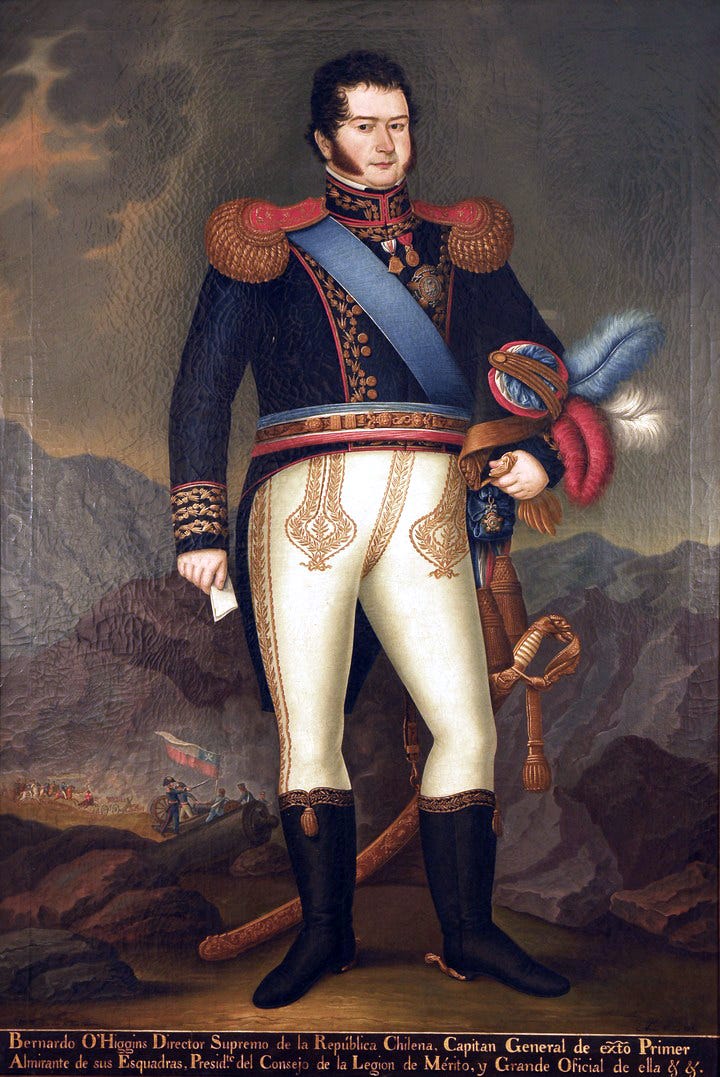

Hard though this regime was on the local populace, San Martín became a popular figure, especially in Mendoza. It helped that he pushed himself as hard as anybody to bring the enterprise forward, working tirelessly and donating half of his salary to the cause; it also helped that his policies breathed new life into the region, socially and economically. Besides, it was understood that the circumstances were extraordinary: with the royalists established in Chile and Buenos Aires distant and useless, San Martín was perceived as the best and only bulwark against an offensive from across the Andes. It came to the point that the local cabildo14 demanded (successfully) that he bring his wife into the city, so that a permanent household would ensure that he did not leave. It would be during his years as a governor that his only daughter, Mercedes Tomasa, would be born.
(Much later, with the benefit of hindsight, this must have appeared like a happy time. Nowhere else would San Martín enjoy as much popular support while he lived; never again would he spend as much time together with Remedios. He would come to love Cuyo, and in 1816 he requested a plot to farm during his retirement.)
Yet the miracle of Cuyo was not limitless. Even with all of its resources deviated to the war effort, there was still a need of men and equipment; by San Martín’s calculations, nothing short of a sizable expedition would be enough to break through Spanish defenses. With this in mind, for two years San Martín lobbied for his Plan to be adopted as a government priority—to no avail. Instead, Posadas and Alvear focused on the old twin objectives of the Banda Oriental and Upper Peru, and in fact deviated many of the resources promised to the Army of the Andes to these two expeditions. San Martín despaired of this. “This is a revolution of sheep, not of men”15, he brooded. It anguished him to think about the people of Cuyo, who were sacrificing so much for the cause, while he was forced to remain idle. In one of his darkest moments, he wrote:
I have been abandoned and compromised in the most unheard-of manner. (…) I wait only for the cordillera to close off to bury myself in a corner where nobody knows of my existence; and I will only leave it to put myself at the front of a posse of gauchos if the matuchos (Spaniards) invade us.
And then, change. Late in 1815, another catastrophic expedition towards Upper Peru proved once more that that path was closed. In the political front, Posadas had lost authority and quit as Supreme Director; he was replaced by Alvear, who went into exile after a short, authoritarian stint. A new congress was convened, which brought some fresh air into the status quo: first, a declaration of independence, and second, a new Director of State, Juan Martín de Purreydón, who was more amenable to San Martín’s plans. After some in-person discussions (and with the help of Tomás Guido, Secretary of War and an ally of San Martín), he agreed to the trans-Andean project.
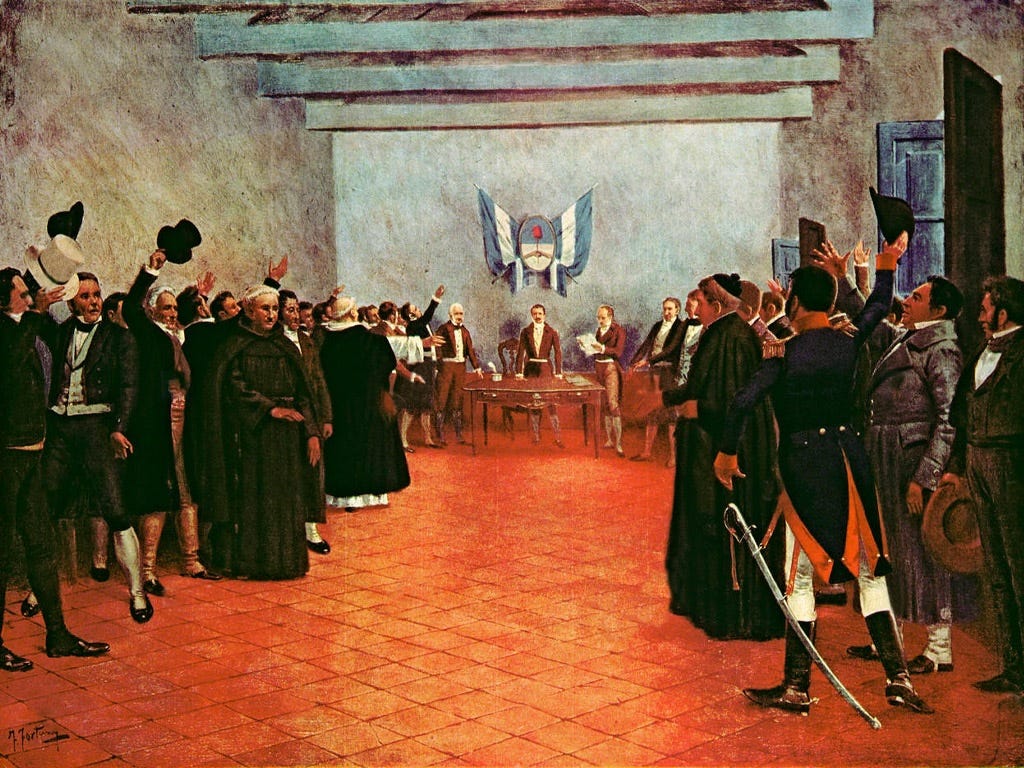

San Martín was named general-in-chief of the Army of the Andes16 and the long-awaited help began to materialize. Men, guns, supplies, mounts—they all walked the roads to Mendoza. With every new arrival, the expedition came closer and closer to its envisioned size. Soon, San Martín would have his army. After that, all that was the rest of the Plan.
War to the Death
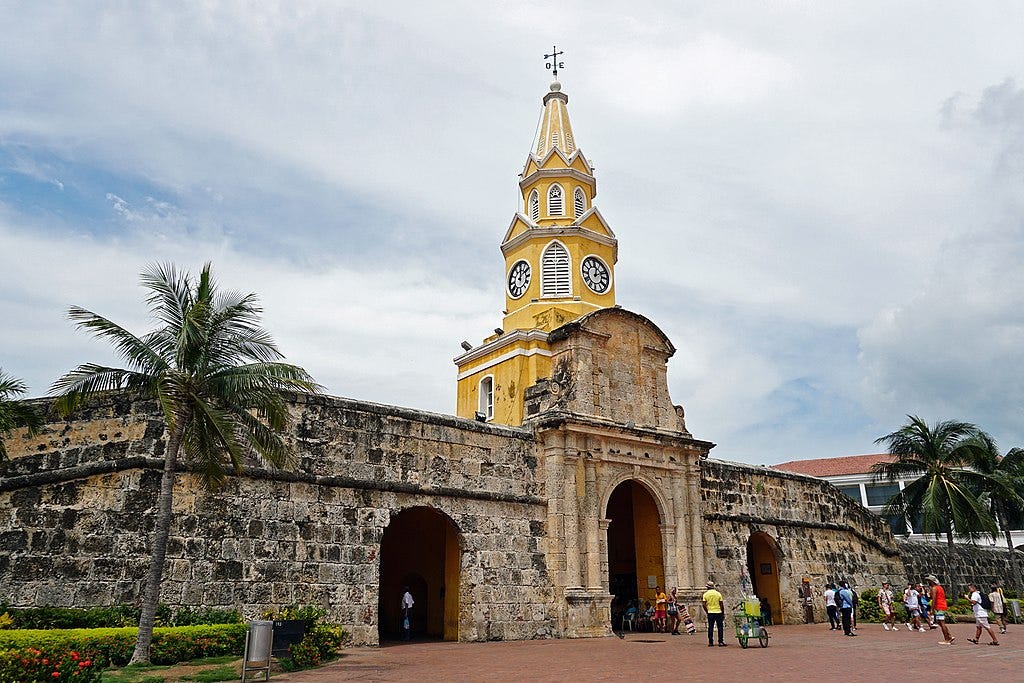
Fleeing the ruins of the First Venezuelan Republic, Bolívar came to Cartagena, an important port in Nueva Granada. Here, in the western neighbor of Venezuela, the revolution still lived, in a fragmented fashion. Like so many other colonies, 1810 had seen a flourishing of local juntas, yet in this case the territory had almost immediately descended into conflict between different factions and regions, fighting each other more often than the Spaniards.
Amidst the chaos, Cartagena existed as a virtual city-state, with its own government, army and constitution. Bolívar and other Venezuelan officers landed with the purpose of putting themselves at the city’s service, hoping that they would get support to attempt to re-liberate their homeland. First, however, they would have to prove their worth.

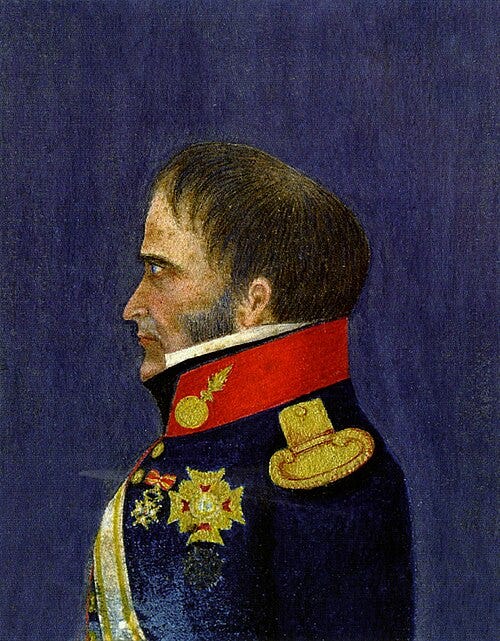
Bolívar’s chance came when he was assigned the command of a corps. Sailing through a series of military victories that beat back the encroaching Spaniards, he quickly rose through the ranks until he was named brigadier general. Here was now an army he could use; he only needed permission to use it. After some arm-wrangling, he managed to convince the Cartagena government to agree to an invasion of Venezuela, but only as far as Mérida and Trujillo, near the border with Nueva Granada. He agreed, but he would not keep his word.
(Several local revolutionaries were not convinced that such an expedition was necessary, or at least that it should be helmed by a native of Nueva Granada; among these was the major Francisco de Paula Santander, who would remain Bolívar’s rival—and later, also ally—for the rest of their lives.)
By then, almost a year had passed since the fall of the First Venezuelan Republic; enough time for disillusionment with the counter-revolution to set in. Monteverde, now Captain-General, had quickly reneged the terms of capitulation negotiated by Miranda and the jails were soon filled with revolutionaries, real or suspected. He then treated Venezuela like his personal fiefdom, rewarding his followers with goods seized from the independentists. Critically, the promises made to the pardos were not kept and the uprisings continued; in turn, this alienated the white elites who had sought security under Spain. As in so many other cases in this period, Spaniards proved their own worst enemies.

Thus, when Bolívar invaded from Nueva Granada the roles were reversed: this time it was the revolutionaries that marched unopposed and grew his ranks with those unhappy with the current regime. In a couple of weeks, Bolívar had already reached Mérida and Trujillo; then, in defiance of his orders, continued on, aiming for Caracas. It was the beginning of his Campaña Admirable (Admirable Campaign).
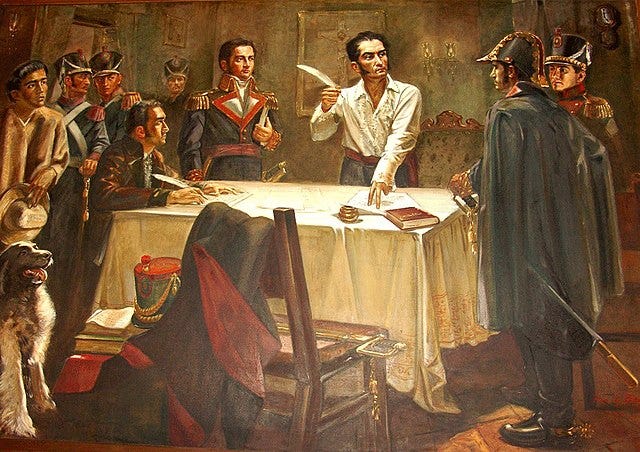
The Campaña Admirable also inaugurated a new, brutal phase of the conflict. Monteverde, sensing that both forces were roughly equal in strength, tried to gain an edge by allowing or facilitating his subordinates to massacre civilians and prisoners. In retaliation, Bolívar emitted the infamous “war to the death” decree, which stated:
All Spaniards who do not conspire against tyranny in favor of our just cause, using the most effective and active resources, will be considered enemies, and will be punished as traitors to the homeland, and therefore, will be promptly executed.
The decree extended to both civilians and military, and unleashed a predictable spiral of violence. While this arguably “evened the field”, the human cost was immense, and it was a wagon from which it would not be easy to step out.

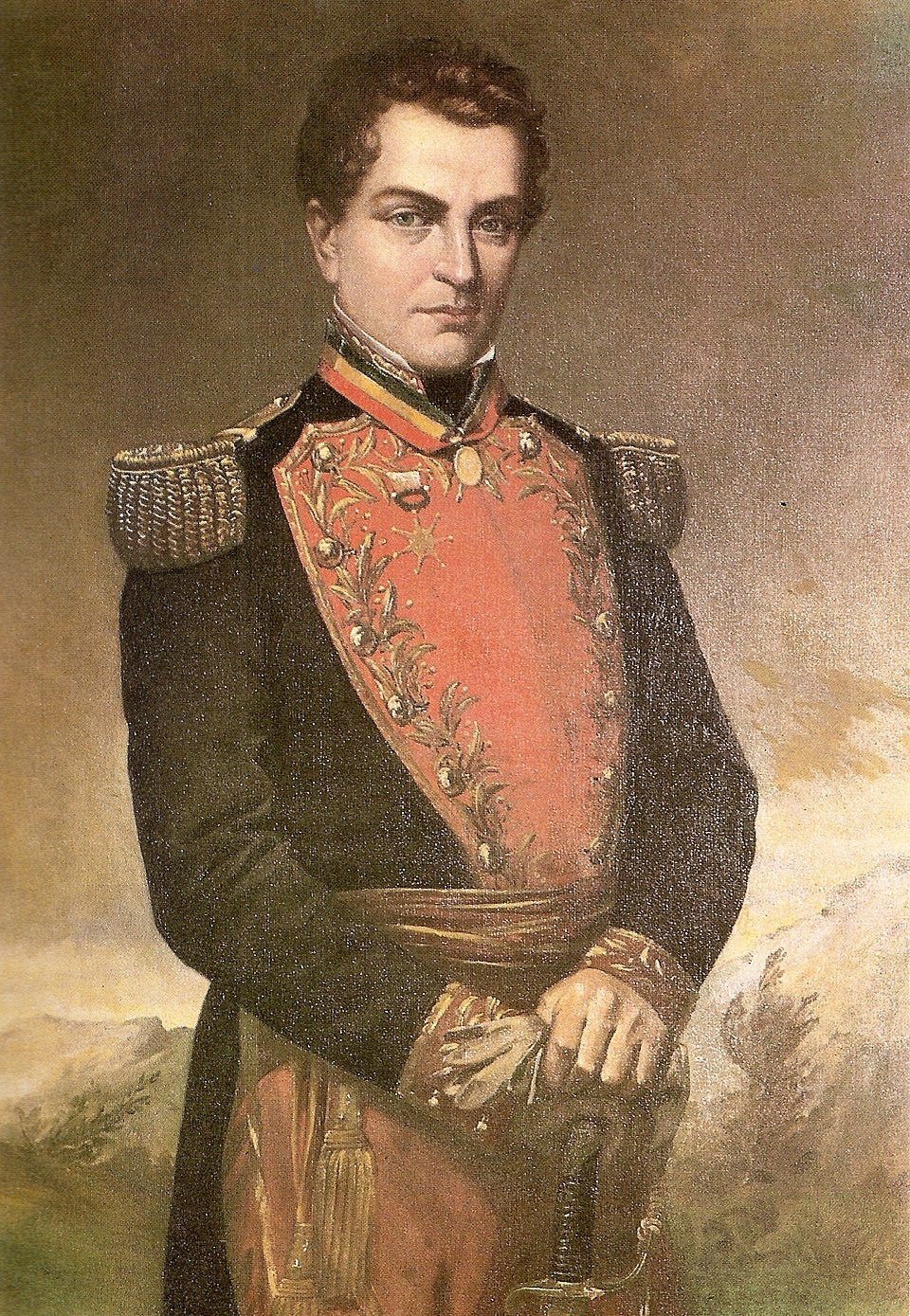
Whether helped by the decree or not, Bolívar outmatched Monteverde. With lightning-speed he seized the initiative and pushed closer and closer to Caracas. The Captain-General hastily evacuated his forces from the city; the inhabitants then welcomed Bolívar with open arms, fearful of pardo violence without a protecting army. He entered his natal city under the cries of “Liberator!” and was crowned with laurels by a group of girls in white. It had been only three months since he left Nueva Granada
The Second Venezuelan Republic was declared, with Bolívar as dictator. It was the first time that he was solely in charge of the affairs, and was determined to avoid the mistakes of the past. In his view, the main problem of the First Republic had been its idealism, based too much on abstract theory and too little on the conditions on the ground. Bolívar coined the term repúblicas aéreas (airy/ethereal republics) to describe this phenomenon. He singled out the complexity of federalism as the flaw that had prevented the last government to react effectively. Instead, he advocated for a strong executive power that could harness the republic’s resources into a decisive defense—at least for now. “A terrible power is needed to direct the Revolution,” he would later write, “and that power must be exercised by one man.” In the Second Republic, that man was to be him.
Yet he was not the only man. To the east, Venezuela was free, but not by his hand. Independently from the Campaña Admirable, a second expedition of exiled officers (initially 45 men) had landed on the eastern coast, quickly gained local support, and dislodged the royalist forces from the region. The leader of this band of military men—the first wave of the caudillos that would come to dominate the Venezuelan political landscape—was Santiago Mariño. Like Bolívar, he was a criollo aristocrat, and he saw no reason to submit to another’s authority. And so, in spite of Bolívar’s insistence on the need of resolute unity, the revolution remained split in two.

The truth was that for all of Bolívar’s efforts, the Second Republic already contained the seeds of its own destruction—and these were remarkably similar to the ones of the First. Besides the lack of unity, it still excluded the lower classes; here the hand of the white Caracas elites still made itself felt. Black and pardo unrest therefore continued. And an even greater threat was arising in the llanos.
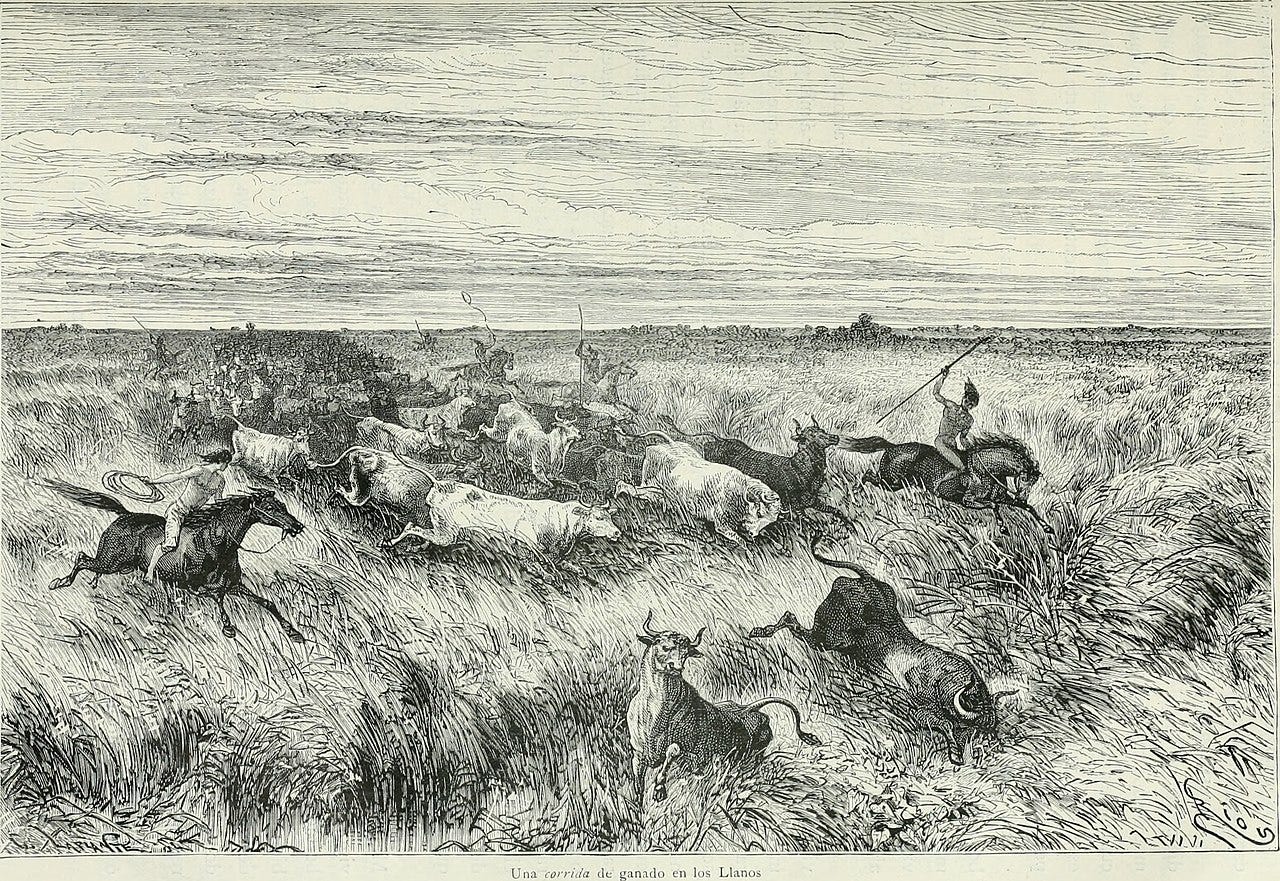
The llanos are an enormous expanse of grasslands in the Venezuelan interior, scorching in the dry season, flooded and swampy in the wet one. At beginning of the revolution, this was a land beyond the reach of the law, inhabited by pardos and vagrants who subsisted by herding the abundant wild cattle. These llaneros had come under threat, however, when the First Republic, faithful to its liberal DNA, had begun to parcel out the llanos, driving the locals away or trying to coerce them to leaving their cowboy-like lifestyle for indentured service as farmhands.
_(14801633623).jpg)
Eventually, unrest coalesced into a mass movement under the leadership of José Tomás Boves. Asturian by birth, llanero by chance (he had used the expanses to escape arrest), Boves had earned his position through an impressive physique and absolute ruthlessness. Like a Genghis he emerged from the plains at the head of an army of riders, promising his followers unlimited loot and a chance of revenge against the white elites. Nominally, he fought for Spain and the King, but in practice he was his own monarch and took no orders from the hapless Monteverde.
A llanero horde burst into the flank of the western republic, leaving in its wake a trail of burnt villages and massacred civilians—the atrocities committed on their way stand out even in the war-to-the-death-period. The massed riders demolished the republican armies that came out to face them. Soon, Bolívar had to evacuate Caracas and flee to Mariño’s side of the country, but that proved a vain escape; Boves hunted him down all the way to eastern Venezuela. Not even when the two leaders put aside their differences and combined forces were they able to stop the llanero advance. Respite came only with Boves’ death, lanced down in a battle that his riders nevertheless won.
By then, however, it was too late. The llanero uprising had dealt the Second Republic a killing blow. All that was left was for regular royalist forces to clean up the remains.
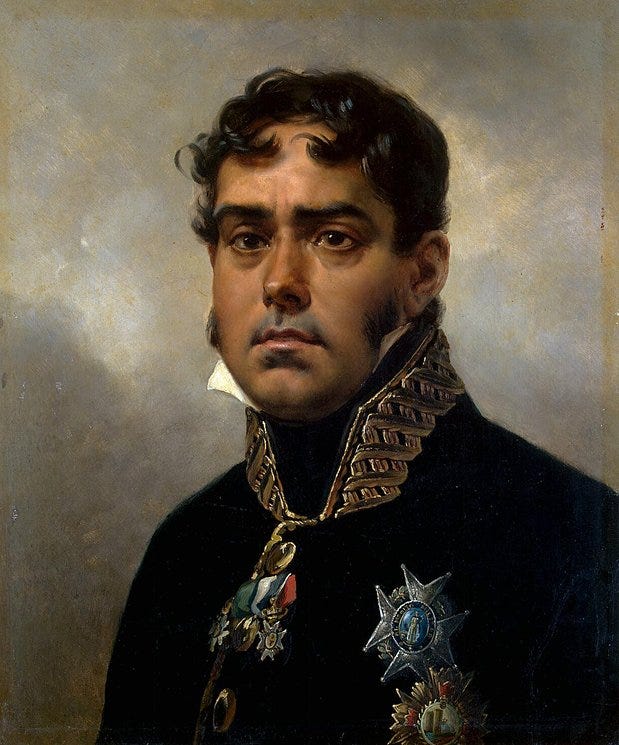

In Europe, the defeat of Napoleon had freed up the resources of Spain. The restored Ferdinand VII dispatched an expedition to recover his lost territories; at ten-thousand men, it was the largest transfer of Spanish soldiers to the Americas in three centuries. Under the command of General Pablo Morillo, a capable veteran of the Peninsular War, they quickly overran what was left of the republican army in Venezuela. Bolívar once more fled to Cartagena, only for Morillo’s men to also irrupt into Nueva Granada. He had to do another escape aboard an English ship.
Again the Spanish flag was raised over northern South America; again Bolívar was exiled into the Caribbean. Yet not all was the same. Though the price had been high, defeat taught its lessons. The Second Republic was dead, but in his mind the Third Republic was already taking shape.
Across the Andes
In Cuyo, preparations for the Chilean expedition were in full swing. Mules were herded; provisions were loaded; warm, mountain-appropriate clothing still needed to be procured. The army drilled the last maneuvers before real action. San Martín, with characteristic attentiveness, kept a close an eye on all this activity. Yet throughout, he did not lose view of the more immediate challenge in the distance. Before facing the royalists, the army would have to overcome an even more formidable obstacle—the Andes mountains.
Imposing in their height and ruggedness, the Andes were demanding in the best of circumstances. The section through which the expedition had to march was particularly difficult: it consists of four parallel ranges, pressed against one another and crowned with some of the highest peaks of the entire Andes. At the time, travel was possible through certain passes, but they were narrow and treacherous; a challenge for an army of almost four thousand men, who also had to transport guns and supplies for the fighting afterwards. On top of all, they risked being intercepted by the Spanish forces, who, if massed at the right place, could nip the expedition in its bud. All these considerations swam in San Martín’s head in those final days in Cuyo.
Before leaving Mendoza, the Army of the Andes marched through the streets in full regalia, a ceremonial exit that included parading a flag of the new republic and an image of the Virgin—San Martín felt that both Cuyo and the soldiers deserved a public display of their achievement after three years of training and privations. Three days of partying capped off the occasion.
Afterwards, to war. In order to conceal the intended destination of the main body of the army, small detachments were sent across a front of about 805 kilometers. The rest was split into two columns that would take different routes, with the intention of re-linking on the other side.
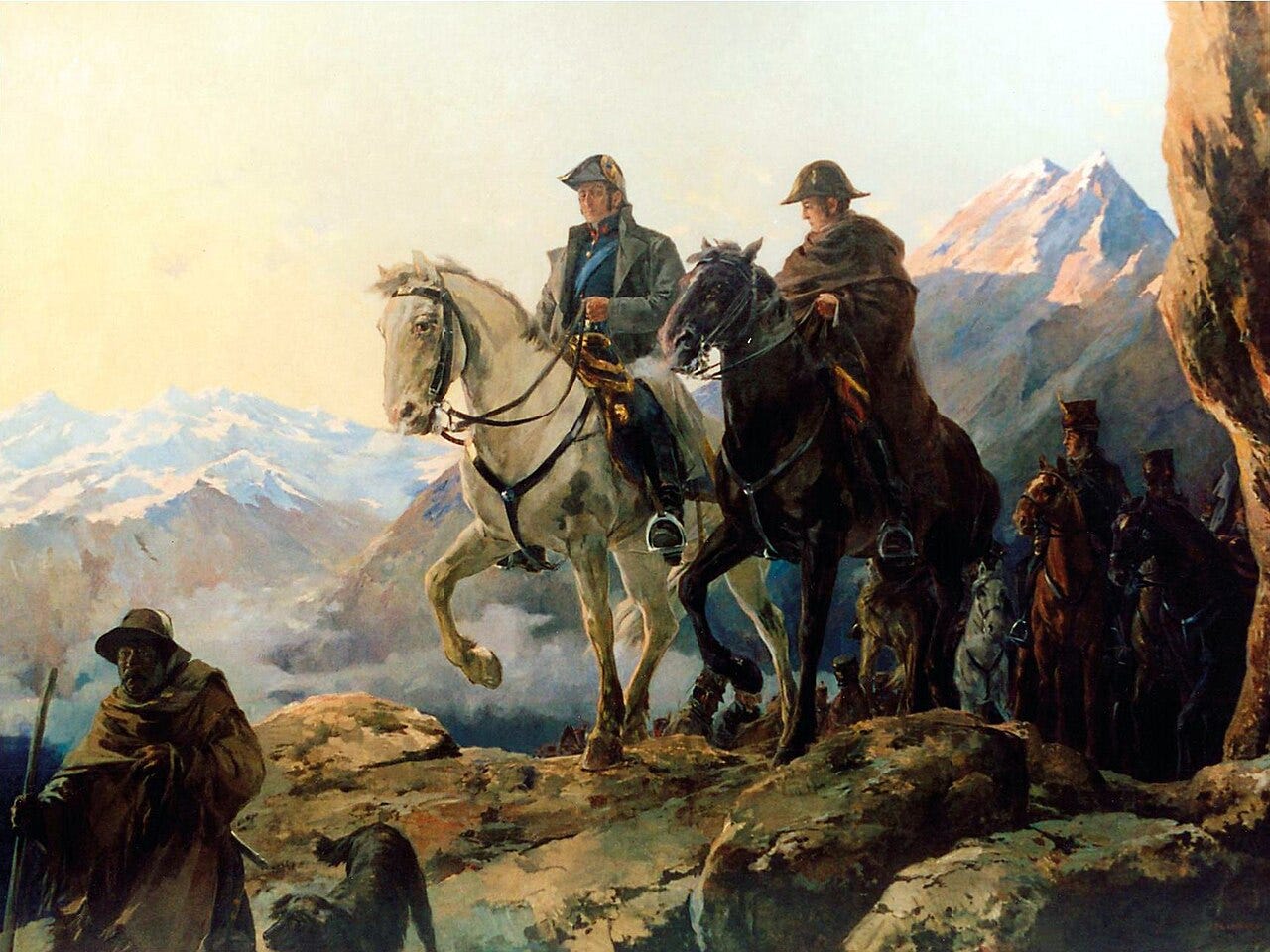

They began their ascent. The Army of the Andes came face to face with the mountains that were their namesake, and the soldiers of the plains of Río de la Plata braved the desolate beauty that can only be found 3800 meters above the sea level. At such height, oxygen thinned and bodies were exposed to cold, wind and sudden hail. To fit the narrow paths, men, mules and horses had to walk in single file, one side the mountain rock, the abyss to the other. The cannon guns were held between two mules or dragged with ropes. The men’s path alternated between ascending and descending as they made their way through the inner ranges.
Eighteen days later, they broke through into Chile. The crossing had cost them three hundred men, more than half their mules, and two thirds of their horses, but in an organizational miracle attributable to San Martín, the two divisions linked up exactly as planned. The tired army camped in Chacabuco, a key position to march on Santiago.
A well-sized royalist contingent was stationed nearby, but not yet at full strength. Sensing an opportunity, San Martín ordered to prepare for battle. The revolutionary forces were frayed from the crossing, but he trusted that his well-trained soldiers, even in their weakened state, could take on the unprepared Spanish forces before the element of surprise was lost.
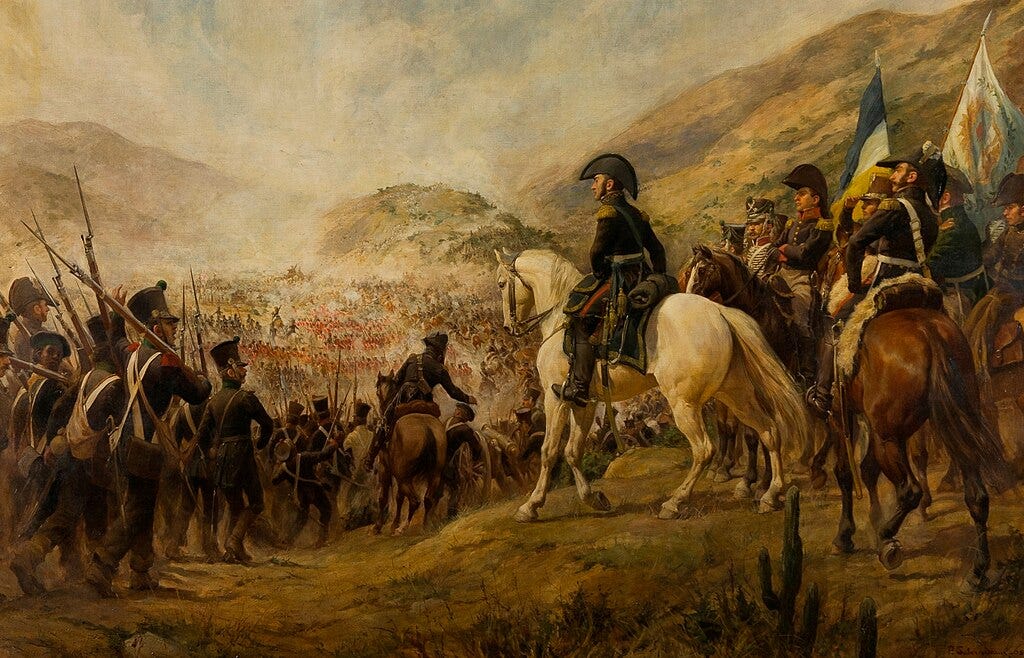

He was correct. In Chacabuco, the royalists were soundly defeated. Two days after arriving in Chile, the Army of the Andes had taken Santiago.
Strategic missteps would delay the full liberation of Chile for another year. It would take another battle—the famous Maipú—to finally remove the Spanish presence in the country. Yet overall, the triumph in Chile proved his Continental Plan right, and already made him worthy of the title of Liberator. He was offered the post of Supreme Director by the Chilean congress, which he rejected: it should be O’Higgins, a native, who led the country, and besides he needed to remain mobile for the next step of the Continental Plan. There would be no peace while Peru remained in Spanish hands.
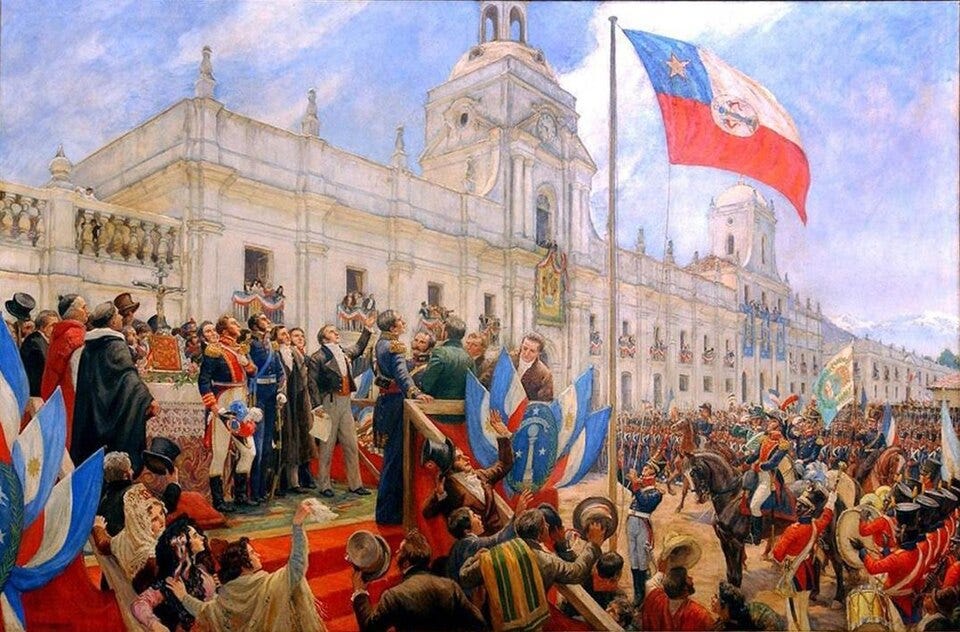

He returned to Buenos Aires in order to gather support for the next leg of his expedition: more funds and men would be needed, and he had to assemble a navy that could face the Spanish Pacific fleet. Always adverse to the spotlight, he attempted to remain incognito during his stay, but he was found out and forced to enjoy a celebration in his honor. Congress received him with a ceremonial reception, military bands accompanied him on the street and crowds cheered on him where he went. When young women descended upon him to crown him with flowers, however, he took them off. For the Southern Liberator, there was such a thing as too much glory.
Rethink, Reload, Re-liberate
Bolívar’s second flight took him to Jamaica. Overall, the stay at the British colony was not pleasant: Morillo had expropriated his wealth, so he lived in poverty, and he was the target of an assassination attempt17. But it gave him a chance to regain his balance. Here he wrote his famous “Jamaica Letter”, where he laid out his views on the revolution, from their origins in Spanish oppression, to the lessons learned from the past two republics (Bolívar’s political thought will be explored some more in the next issues).
Soon he was ready to get back into the fray. After a stop in Haiti, where he received generous help from its president Alexander Pétion18, he landed on northern Venezuela. Instead of making for Caracas, however, he made a beeline for Guayana, in the country’s interior. There, at the vast banks of the Orinoco river, he established the base for the Third Republic.
Guayana was a strategic choice. Dominated by immense plains and swampy marshes, it provided geographical protection against Morillo’s forces. On the other hand, it was connected to ship navigation through the Orinoco river, and the patriots could trade with the foreign merchants that sailed upriver: the herds of roaming livestock turned into weapons and equipment. From there, Bolívar could dare recover the rest of Venezuela.
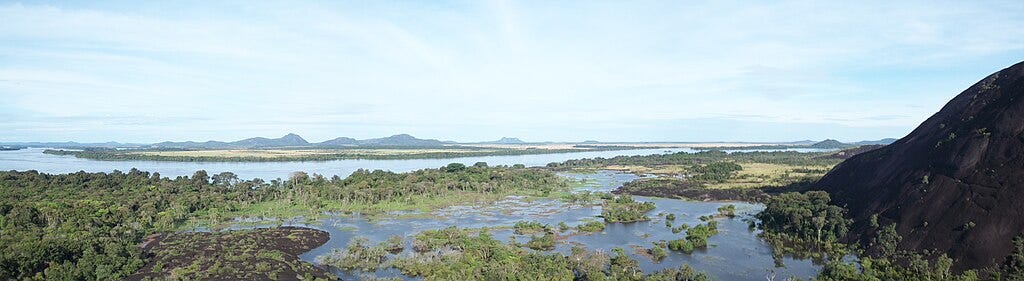

Having secured a stronghold, his next challenge was unity. After the collapse of the Second Republic, the caudillos had devolved into bands of outlaws, disorganized and almost criminal in their dealings, but keeping alive resistance against the Spaniards. Their motivation, however, was as much about independence as about the loot they obtained from their insurgent activities. As a result, they fought with one another as well as with the Spaniards, vying for the legitimacy that only strength and military success could provide.
If the Third Republic was to last, it needed these men working for it. Bolívar had to follow two strategies. First, he had to earn their respect. This meant showing that he was as at least as strong and ruthless as they were—that he could win the battle of personalities as much as actual battles. Once this was achieved (usually through a combination of force and flattery), he integrated them into the regular army, making generals out of gang bosses and soldiers out of bandoliers. Here Bolívar was offering them legitimacy and a place of power in the new republic; in exchange, he wanted obedience and respect for its institutions.
This twin approach was generally successful. One by one, caudillos submitted to the republic’s (and his) authority. In the east, Mariño was brought into the fold, as were his subordinates; one of them, Antonio José de Sucre, would become one of Bolívar’s most loyal friends and allies, and the designated successor of his projects. In the west, the llaneros had adopted Juan Antonio Páez as their new leader; luckily for Bolívar, he was republican and hungry for legitimacy19. With Páez also resurfaced Santander, who had escaped from Nueva Granada to fight in the llanos. Overall, however, the process of “taming” the caudillos was not without hiccups, nor was the result entirely stable. Bolívar had to keep a close eye on his new associates, who tended to get overeager when left unsupervised.
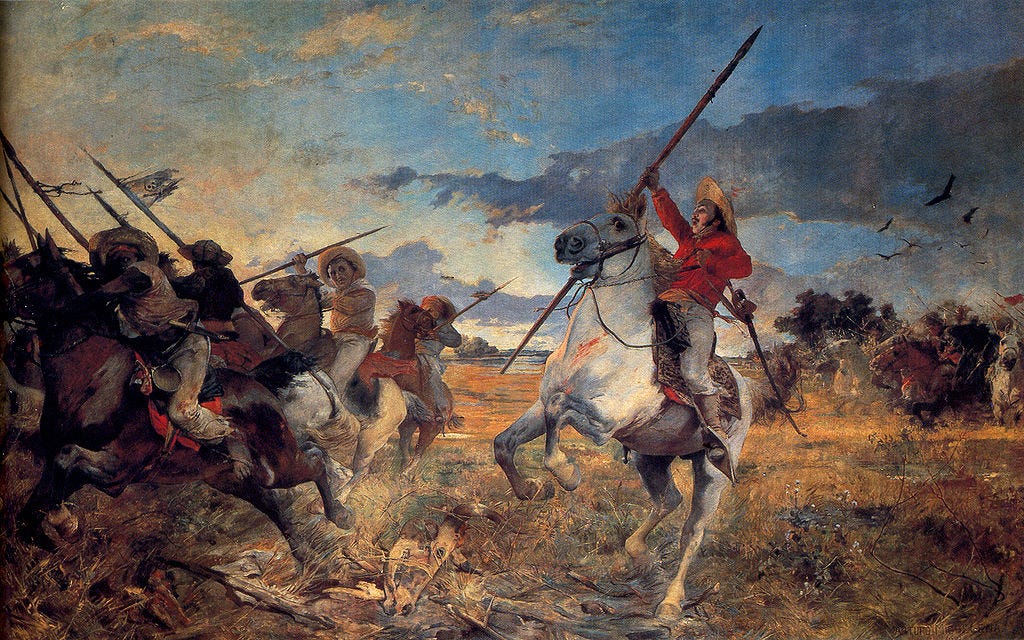

A reason why Bolívar could enlist the help of the llaneros was that he could finally lure the pardos to his side. Morillo’s counter-revolution, intent on turning back the clock for an absolutist king, had proved that it could offer nothing to them but the same society as before 1810. In contrast, Bolívar had finally escaped the hold of the white Caracas elites and enabled some degree of social mobility by opening up the officer ranks to pardo soldiers. Slaves, too, could become free—if they joined the army20. Finally could the base of the revolution be widened, or at least be convinced not to work against it.
With the caudillos and the pardos on his side, Bolívar—at this point president of Venezuela—and Morillo were evenly matched. The decree of war to the death, while not officially repealed, was weakened as both sides had dialed down on the violence, and a degree of stasis had befallen the conflict; Morillo, stretched thin over Nueva Granada and Venezuela, could not march into Guayana, while Bolívar’s attempts to dislodge the royalists by attacking from the south proved ineffective. A change in strategy was needed to escape the deadlock.
For Bolívar, the answer was a lateral move, remarkably similar to San Martín’s. Morillo’s weakpoint, he sensed, was Nueva Granada. For one, the area to cover, from Quito to Cartagena, was larger than Venezuela’s; furthermore, the restored viceroy had acted with such brutality and greed that Spanish rule was unpopular and brittle. The region was ripe for the taking; the only obstacle was the thick mass of northern Andes in-between.
A plan was made to send a liberating expedition across the mountains. It was not without risks. Besides the obvious physical challenges, it would imply leaving Venezuela in the hands of the recently-converted caudillos. But Bolívar was determined to break the impasse. On 27 May 1819, he and 2100 men began ascending the mountain range.
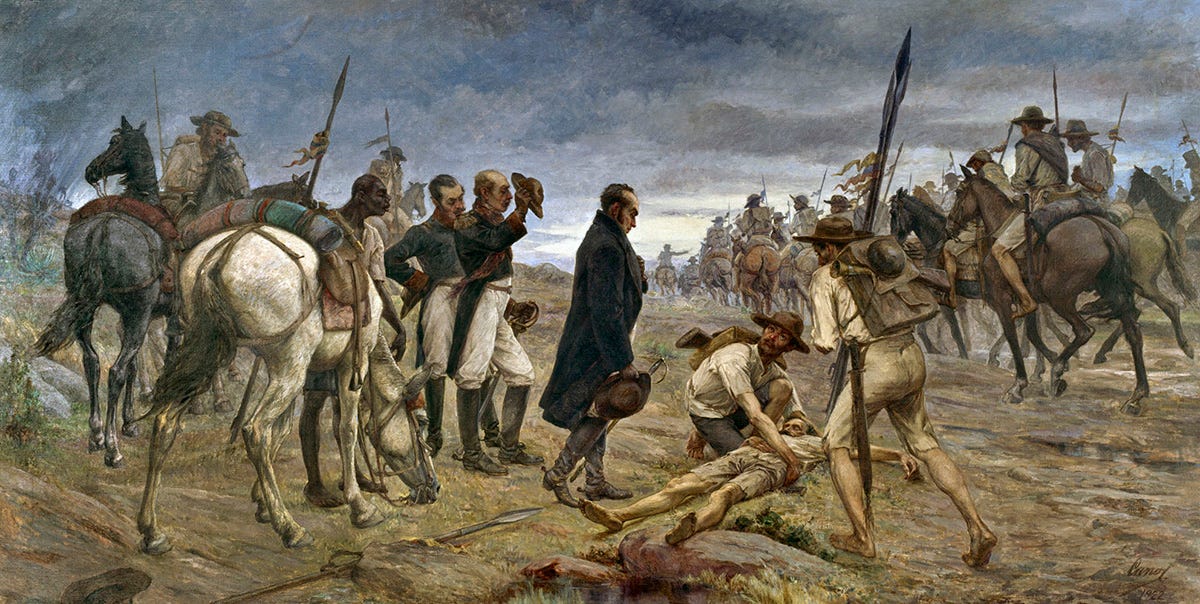

Though this section of the Andes was (generally speaking) less high than the one of the southern crossing, it had its own difficulties. The changes in temperature were harsher, as tropical warmth gave way to mountain cold, and the army crossed at the beginning the rainy season, which meant that they were buffeted by almost ceaseless rain throughout. When the survivors arrived in Nueva Granada, more than a month after setting out, their tattered clothing and malnourished frames made them appear more like beggars than soldiers.
But the deed’s objective was reached: the strategic parameters had been upended. After a few weeks of rest, the expedition gained two victories over the Spaniards, first at Pantano de Vargas, then at Boyacá. Three days later, Bolívar and Santander entered Bogotá in triumph. Most of Nueva Granada soon followed into liberation—only the western regions around Pasto and Quito remained royalist. The wager had paid off: Morillo was isolated in Venezuela.
And the royalist situation was getting even worse. In Europe, a coup had replaced Ferdinand VII with a liberal government, eager to negotiate with the new republics and, if possible, bring them back into the Spanish fold. Bolívar knew the time for that was long past, but he used the chance to reorganize. When hostilities resumed, he could witness the fruit of his long years efforts: republican armies from all across the liberated territories—the llanos, the Andes, western Venezuela—led by erstwhile caudillos that now sported titles like General Páez and General Mariño—all converging on the Aragua valley, on their way to Caracas. The combined forces beat the royalists at Carabobo; as with Nueva Granada, soon afterwards all of Venezuela was under republican control. After seven years of absence, Bolívar returned to his beloved home-city to the glory of euphoric crowds. The Third Republic was here to stay.
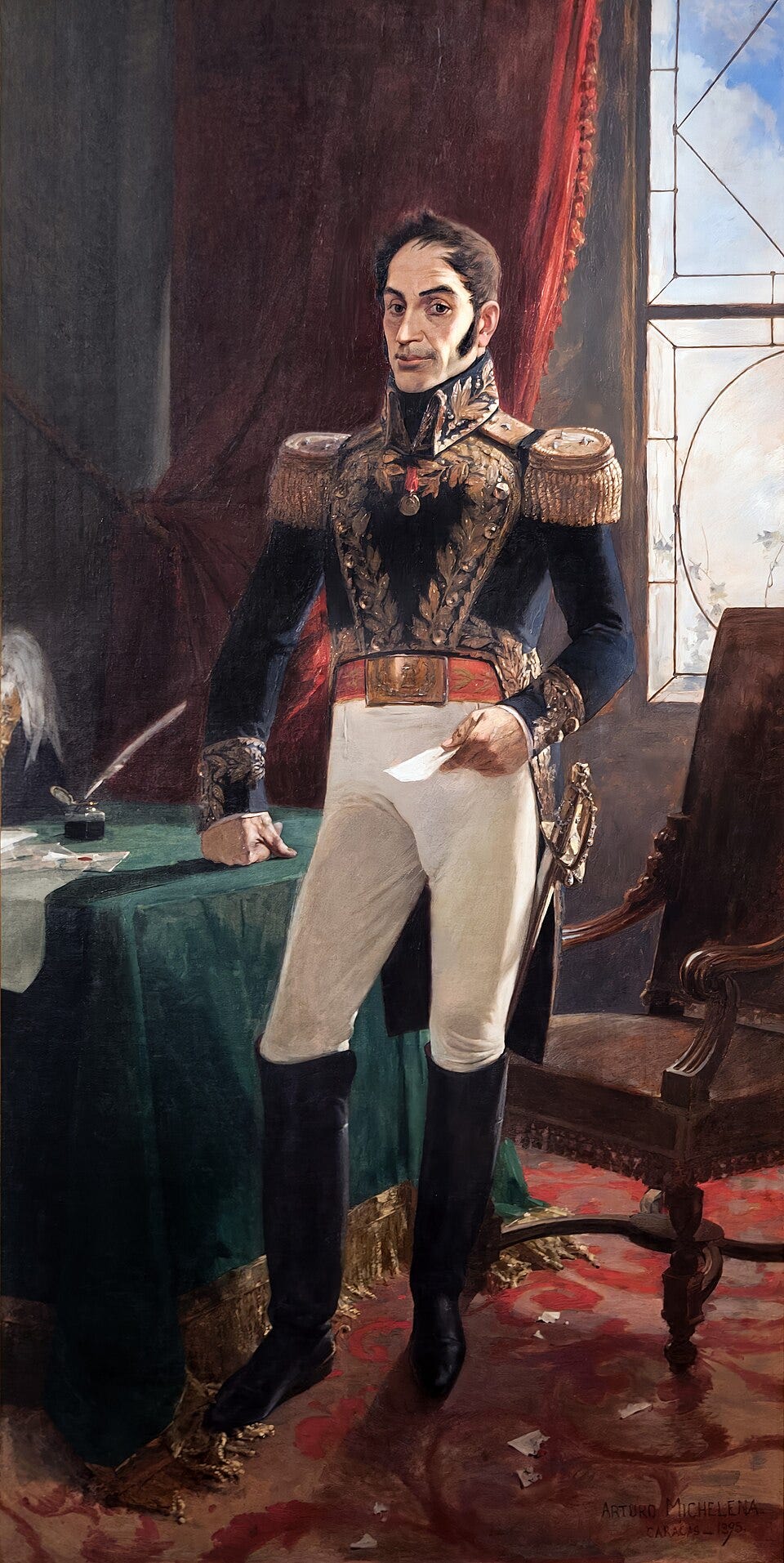
Bolívar was now the Liberator of Venezuela and Nueva Granada. His vision, however, was not of two nations, but one. In his view, the only way to ensure the future prosperity of the region was to federate the two territories into a single republic, a country that would stretch over northern South America from the Pacific to the Atlantic. In a nod to Miranda, he named this new nation Gran Colombia.
For the next two years, he was busy setting up the foundations of this project, as well as reducing royalist resistance in Pasto and Quito. It was in this state of affairs that he received a letter inviting him to a meeting to discuss the future. The letter came from San Martín, and one of the main topics would be Peru.
Thank you for sticking to the end! Like I mentioned, I had trouble balancing length and coherence—when it comes to history, I always try to be as nuanced as possible, but that can hit Substack’s email limit very fast. The good news is that next posts should be much shorter—no gigantic overview of revolutions anymore.
In the next issue, revolution knocks at Peru’s door and the parallel lives of our two protagonists finally intercept. If you are interested in what happens next, subscribe to get it fresh in your inbox.
Thumbnail image source: Forseti zu Gericht sitzend, by Carl Emil Doepler

Rivadavia was not a formal part of the triumvirate, but as its secretary directed much of policy.
San Martín was 34 at the time, while Remedios was only 14. Such an age difference among couples was common at the time.
Porteño is often used to refer to people and things from Buenos Aires, alluding to its position as an important port.
Between the coup and the Army of the North, San Martín fought the Battle of San Lorenzo and helped improve the defenses of Buenos Aires. I omitted these because they were strategically trivial and do not really reveal more about San Martín other that he was a good military commander.
Literally Eastern Riverbank; more accurately Eastern Province.
Feeding these fears: about 30 years earlier, the region had been shaken by a brutal, widespread peasant insurrection known as the Tupac-Amaru rebellion.
There is no exact translation for this, but it would be somewhere between “strongman” and “warlord”. Unlike regular soldiery, a caudillo’s authority is strongly personalist, emanating from family ties and charisma.
Bolívar got the position by offering to pay for all the expenses out of his own pocket—a proposition the cash-strapped junta could not turn down.
It has been theorized that he was actually intending to sail to Cartagena and reattempt the liberation of Venezuela from Nueva Granada, much as Bolívar would later do.
By some accounts, Bolívar wanted to have Miranda shot, but was withheld by his co-conspirators.
Translates to “foolish fatherland”. It is also used to describe the first republic of Nueva Granada
Nowadays, you can cover the distance in about 5 hours by car.
The role of British volunteers in the South American revolutions will be explained in the next issue.
Local town council.
He had this thought in 1814, when he first came to the governorship, but it applies to the entire experience.
The cabildo of Mendoza lobbied to have San Martín upgraded to brigadier general, much to his embarrassment. He had to publish an open letter disavowing involvement in the proposal.
A slave, bribed by the Spaniards, sneaked into his room at night and plunged a knife into the neck of the person sleeping in his hammock; by coincidence, Bolívar was out that night, and it was a friend of his that was killed.
All Pétion asked in return was the promise to abolish slavery in the new nations.
Páez, who was illiterate, had a strong inferiority complex towards those he considered cultured. As a result, he was easily swayed by Bolívar and his fancy European education.
However, this policy was unpopular with both slaves and slaveowners and had little effect in recruitment numbers.